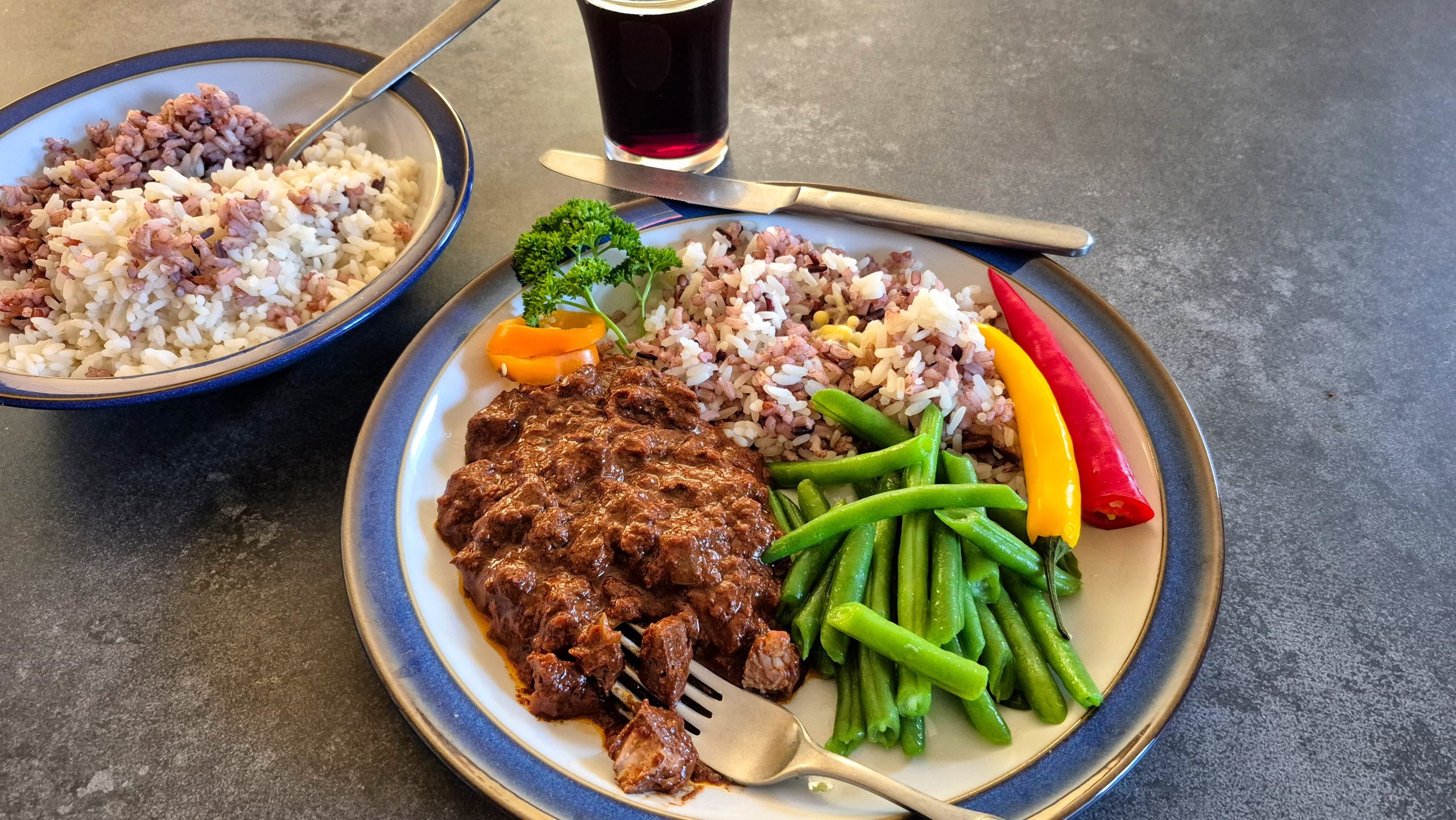
You could make a case for calling this Peter’s signature recipe. It got cooked at home at least three or four times a year, as well as pretty much always for house guests, and sometimes even when away from home. (The former main illustration for the recipe was taken with a tiny cheap key-fob digital camera when he was cooking it for a couple of opera singers we know, who then lived in the Vienna Woods).
Possibly its most unusual outing was at a house party in LA, where we caught George Takei (and, IIRC, his soonish-to-be-husband Brad) in the act of mopping out the casserole with a piece of bread in order to get the last of the sauce.
This was maybe the first recipe Peter devised as a young cook. He was always proud of it (with reason, to judge by the many houseguests who scoffed it up and wanted the recipe).
So here it is, with notes.
This is a Mexican recipe devised from one originally intended to use a whole pork roast. It’s really good.
The original recipe was for a big roast with a basting sauce, but I couldn’t be having with all that, so I tweaked it to make it less labor-intensive (i.e., simple and fairly lazy). I’ve also added adaptations for meats other than pork: the only difference is the cooking time.
This recipe produces a casserole/hotpot/stew/whatever large enough to feed six people. I usually allow ¼ kg / ½ lb of lean meat per person.
Cubed pork holds together well, and anyway I always overcook pork a little, so its (stovetop) simmering time is approx. 4 hours at a gentle simmer or low-set oven. Cooking time for other meat is proportionately shorter.
The finished product should be chunks of “fork-tender” meat in a rich, brick-red sauce; if you overdo it so everything comes apart (unlikely with pork and lamb, but possible with chicken or beef) you still have an incredible stew, an amazing thick soup, or the pasta sauce of the gods…
Re: the tarragon vinegar: In places where you can’t buy it, you make it. Get white wine vinegar, heat it to a simmer, stick tarragon into it, take it off heat, bottle it back up and leave it alone for a week or so. (Even dried tarragon will work if you’re desperate.)
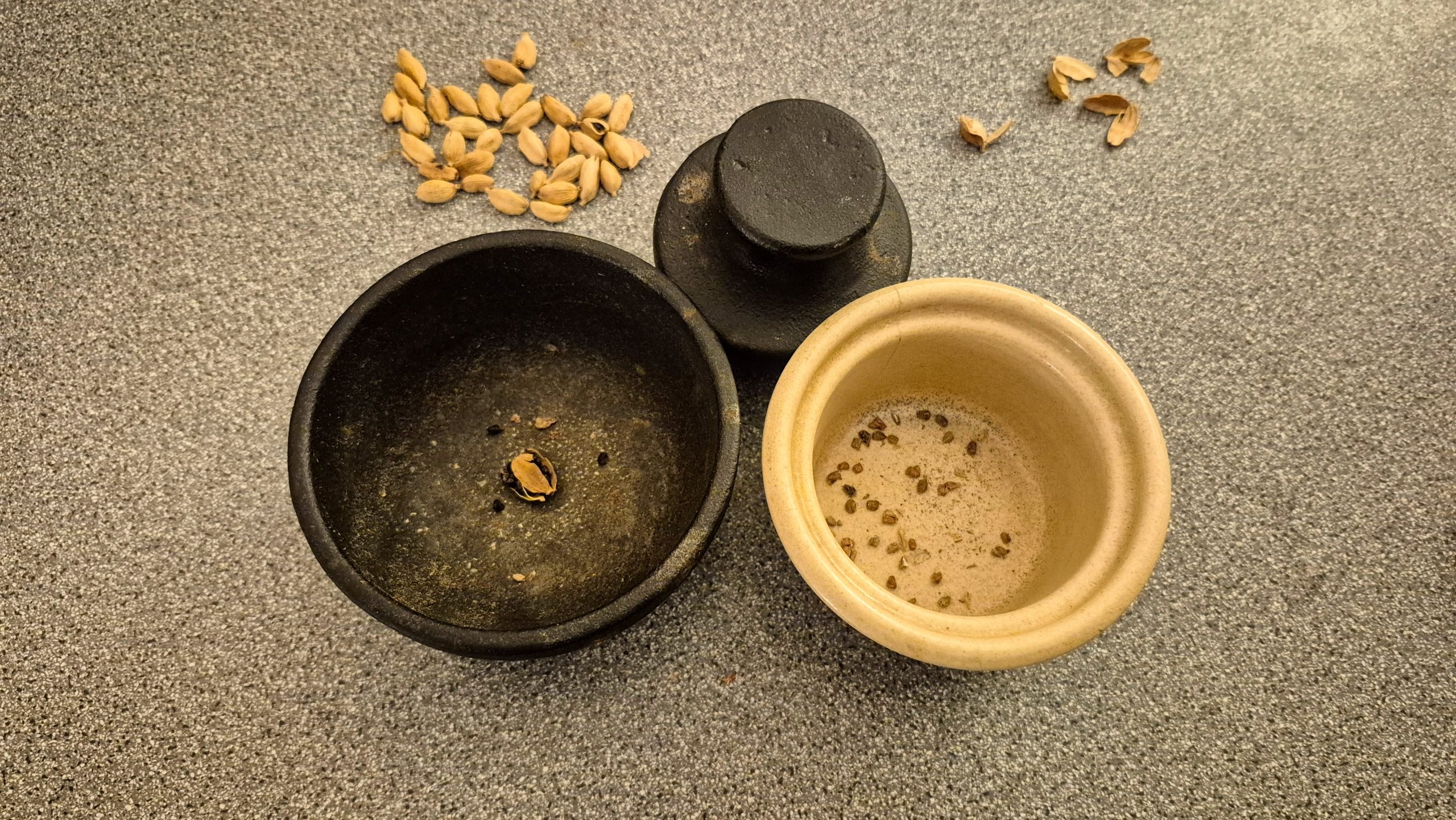
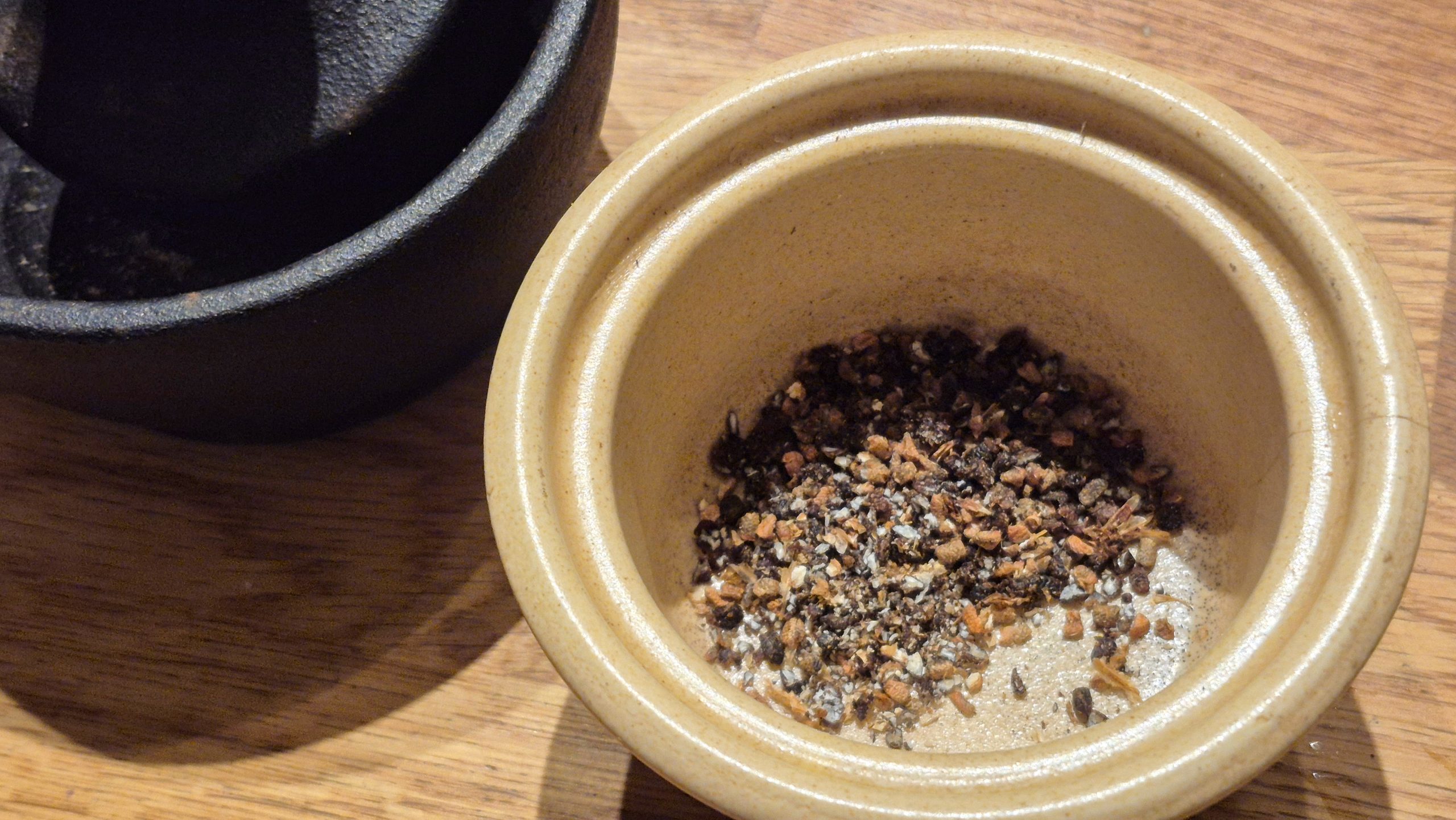
Re: juniper berries: a good grocery will have them from one of the major providers [Schwarz in the UK, or McCormick/Schilling in the US]. But they are kinda regional. Health food stores or specialty ethnic groceries sometimes have them.
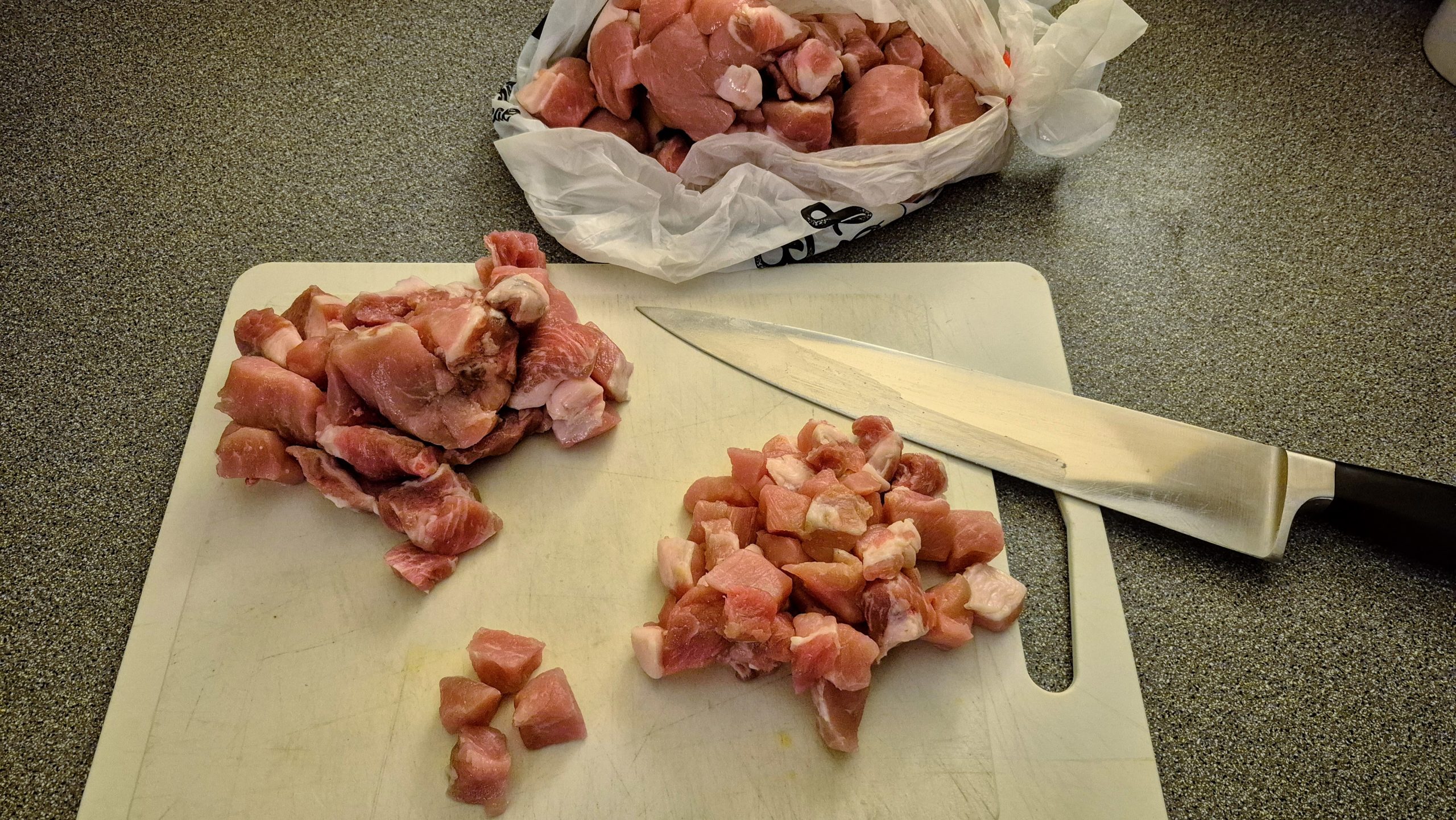
(Peter was always insistent that the pork should be no bigger than would comfortably sit in the bowl of a tablespoon. Though our local craft butcher (the fabulous Pattersons of Baltinglass) kindly cubed these for me, they were larger than Peter would have preferred, so I’ve cut them down to size.)
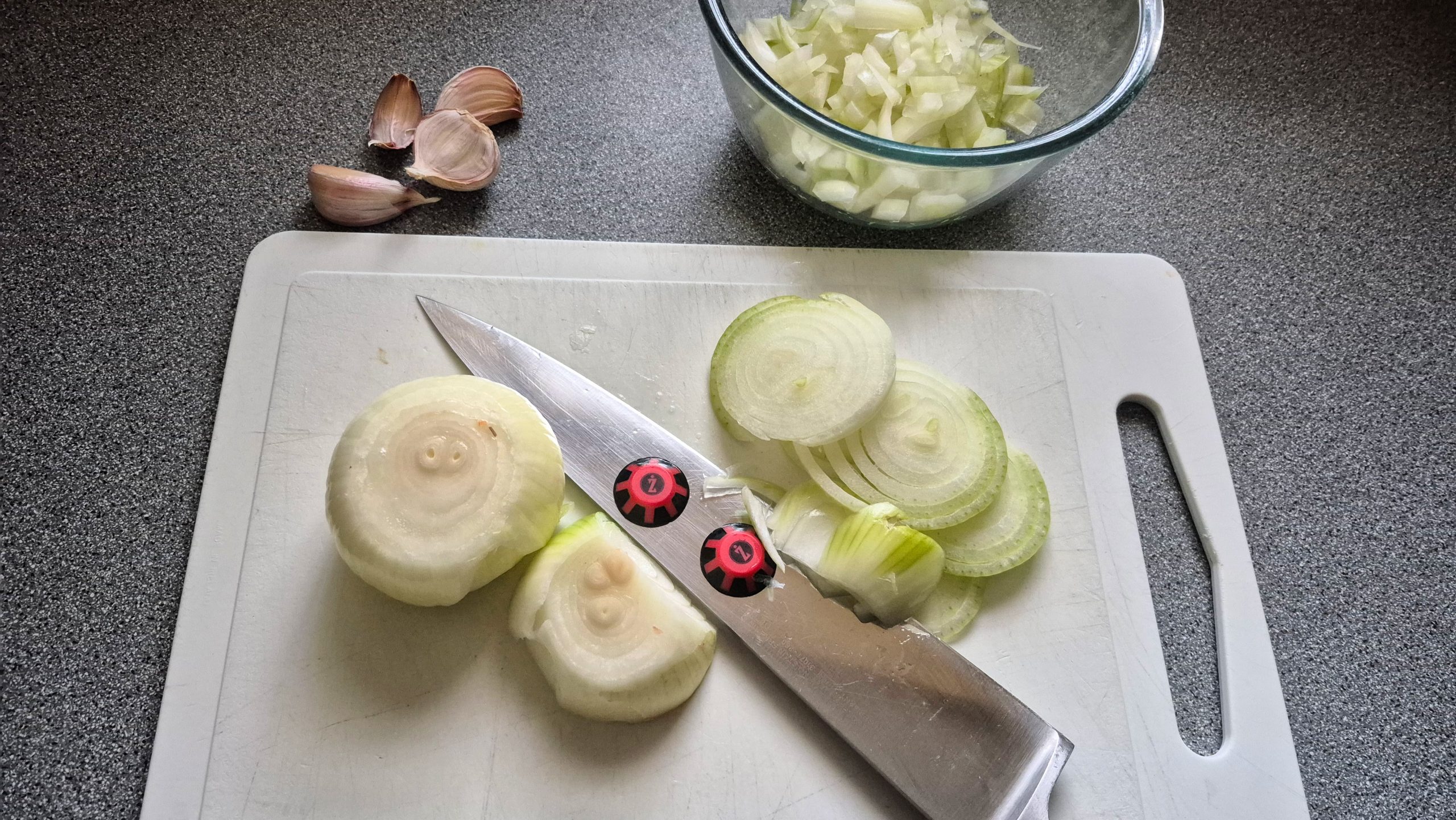
SAUCE INGREDIENTS:
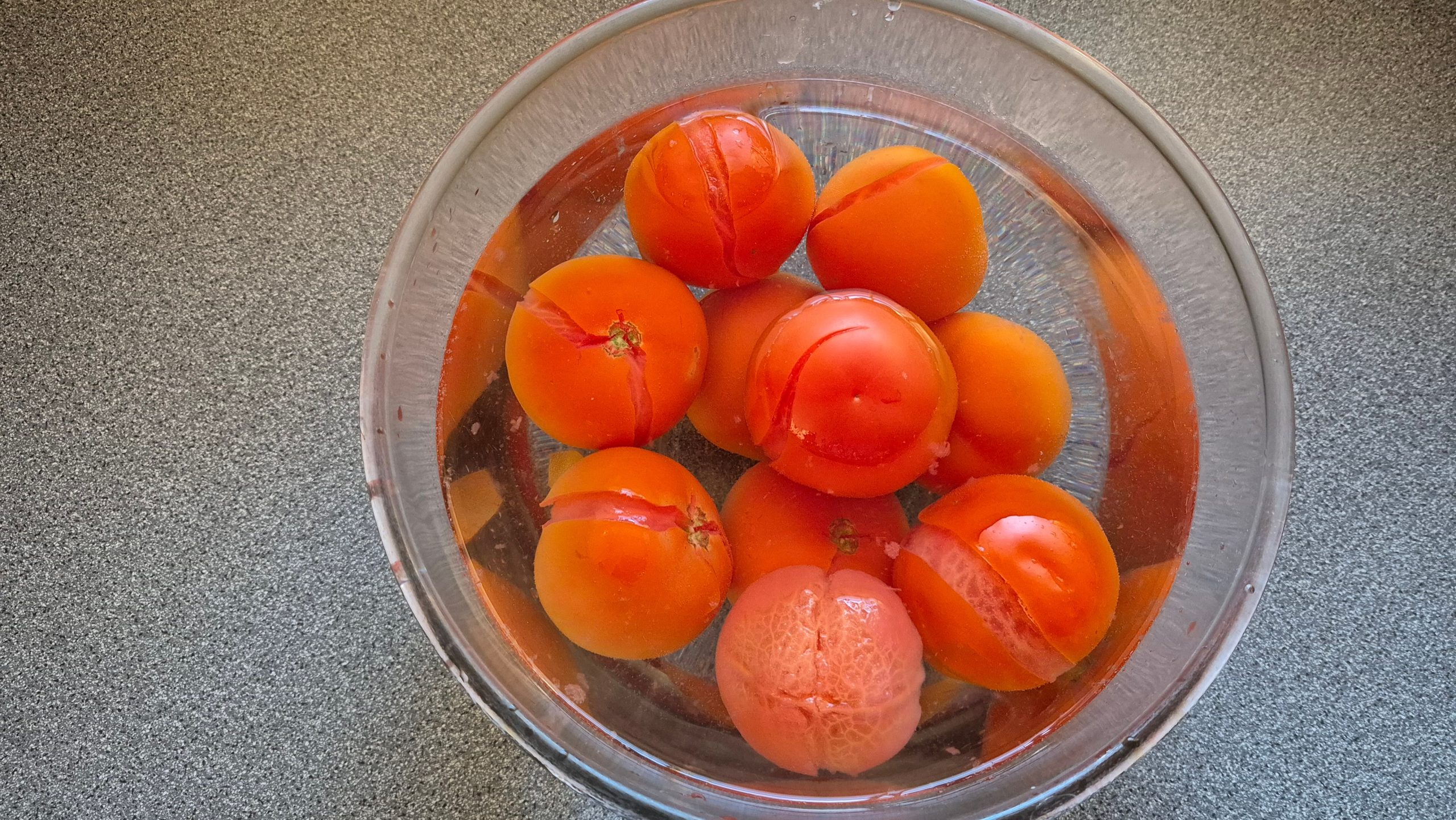
(Normally Peter would used canned tomatoes in this, but since other folks in my neighborhood are going to be eating some of this, I’ve gone a little further and grabbed fresh tomatoes, even though they’re winter ones. You can see that they’ve been blanched in boiling water and then dumped into a cold water bath so they’ll skin more easily.)
Put a little oil in a casserole and sauté the cubed meat until all red/pink colour is gone, then remove and set aside.
In the same casserole, heat the rest of the oil and sauté the onions and garlic until soft and golden. Then add all the remaining sauce ingredients and simmer gently, partly covered, for 45 minutes. (Don’t cover completely or the tomatoes will become bitter.)
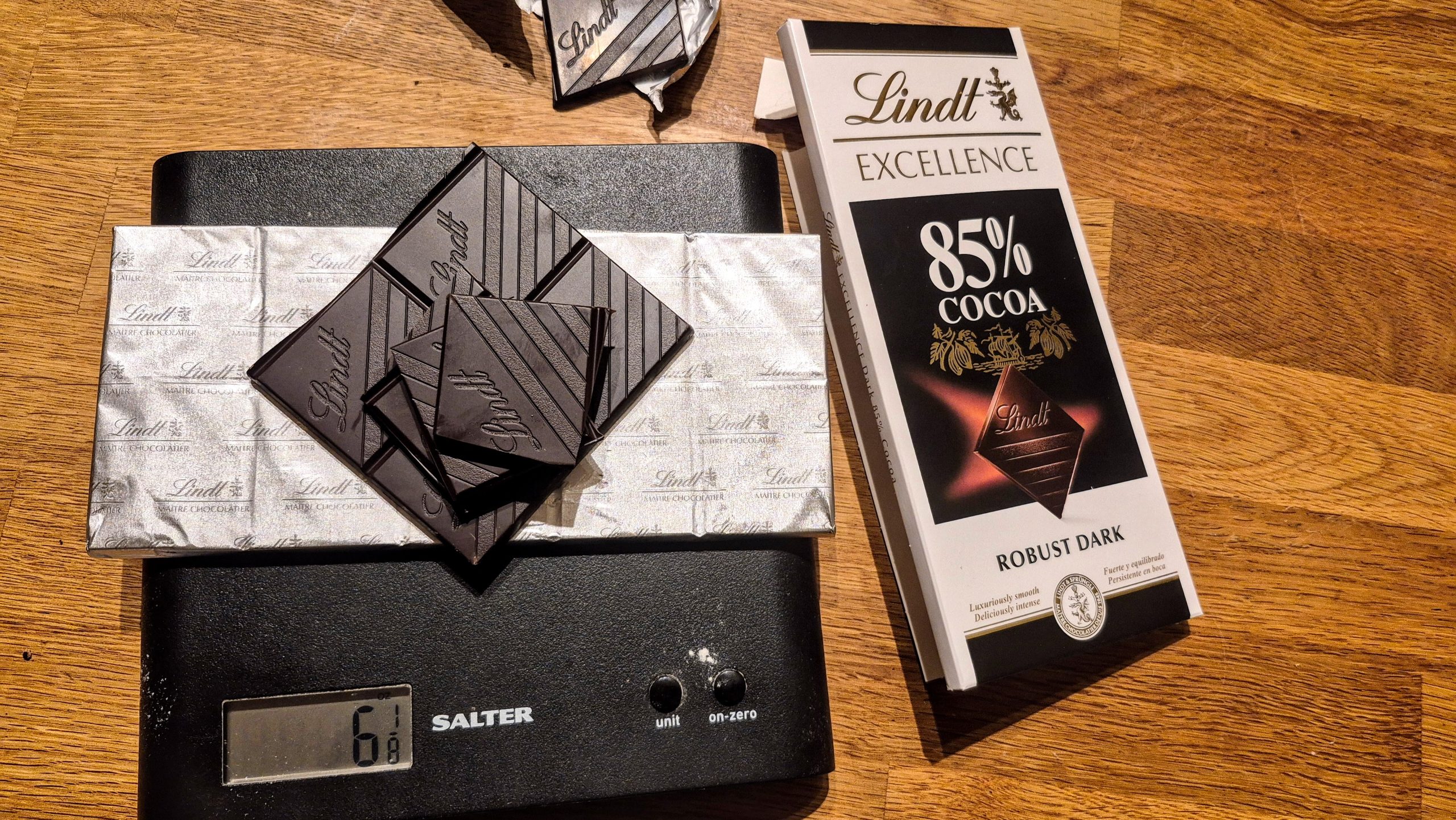
Add the meat, and finally the chocolate…
…bring everything to a boil, then turn the heat right down to a very gentle simmer and cover tightly. We have Le Cousance enamelled cast ironware with “self-basting” buttons moulded inside the lid – vapour condenses on the lid and drips off these buttons back into the casserole; I think Le Creuset has something similar.
Give about 3½ -4 hours for pork, 2½-3 hours for beef or lamb, 1½ -2 hours for chicken. At the first time given, start checking: when the meat is fork-tender, it’s done.
(This can also be cooked in an oven. Preheat the oven to 120C/250F, return the meat into a casserole, bring to the boil and cover tightly. In a fan oven, seal the casserole with foil or flour-and-water paste to prevent the forced air from drying things out. It can also be prepared in advance and placed in a timer-oven when leaving for work to be ready in the evening; if so, add an extra 20 minutes pre-heat time.)
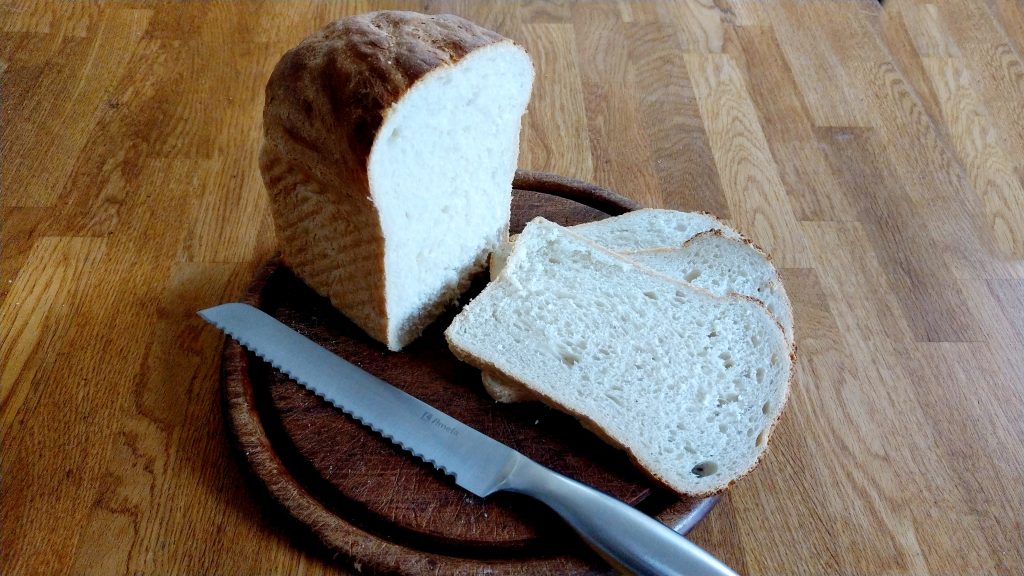
The finished product will be a handsome deep terracotta red, so serve it (for a nice colour contrast) with sliced green beans and plain white rice, or 2/3-1/3 white rice and wild rice. Or try it with couscous. (It works!) Or polenta. Or even mashed potatoes (peel them, boil them, mash them and don’t add butter, cream, milk or anything else except a pinch of salt.) What you’re looking at here are methods of getting all of the sauce. For the same reason, have some crusty French bread on the table as well. It all saves on washing-up.
For drinks, some vin trés ordinaire. The sauce is heavily garlicked, onioned and vinegared, so don’t bother with anything too complex or expensive. Egri Bikhàver Bull’s Blood is good. Or a rough non-Classico Chianti, the sort that comes in a straw-covered fiasco. If you don’t like red, go for a potent dry white like Orvieto Secco, Muscadet Sevré et Mains, Gewürztraminer or Chardonnay (French rather than Californian, unless you like the taste of enough oak to build a table.) Rosé for some reason doesn’t work, at least not for me.
This isn’t haute cuisine. But it’s fun!