“This special and renowned recipe,” says James Porterfield in Dining By Rail, “perhaps the best French toast of them all, was perfected by Fred Harvey chefs in 1918 for the Santa Fe Railway’s dining cars.”
Fred Harvey may need a brief introduction to those who’ve never heard of him. A British immigrant from Liverpool, he worked his way up through the mid-1800s US food service industry and over time went to work with various railroads, where he became profoundly dissatisfied with the quality of the food and service offered to their patrons. In 1876 he entered into a “handshake” deal with the head of the Atchison, Topeka & Santa Fe railroad to take over management of the railway’s station-based eating houses.
Harvey’s insistence on reliable and universally available, reasonably-priced, high-quality food, served in attractive and uniform surroundings by equally uniform trained professionals, makes it easy to consider him the inventor of the concept of the chain restaurant. Under his management the Santa Fe station restaurants, now renamed Harvey Houses, became a roaring success; at their peak there were 47 of them. (Harvey also got involved in the Santa Fe’s dining car operations, and the famous and beautiful Mimbreño china service was designed for the Harvey-run dining cars of the Chicago-to-LA Super Chief trains.)
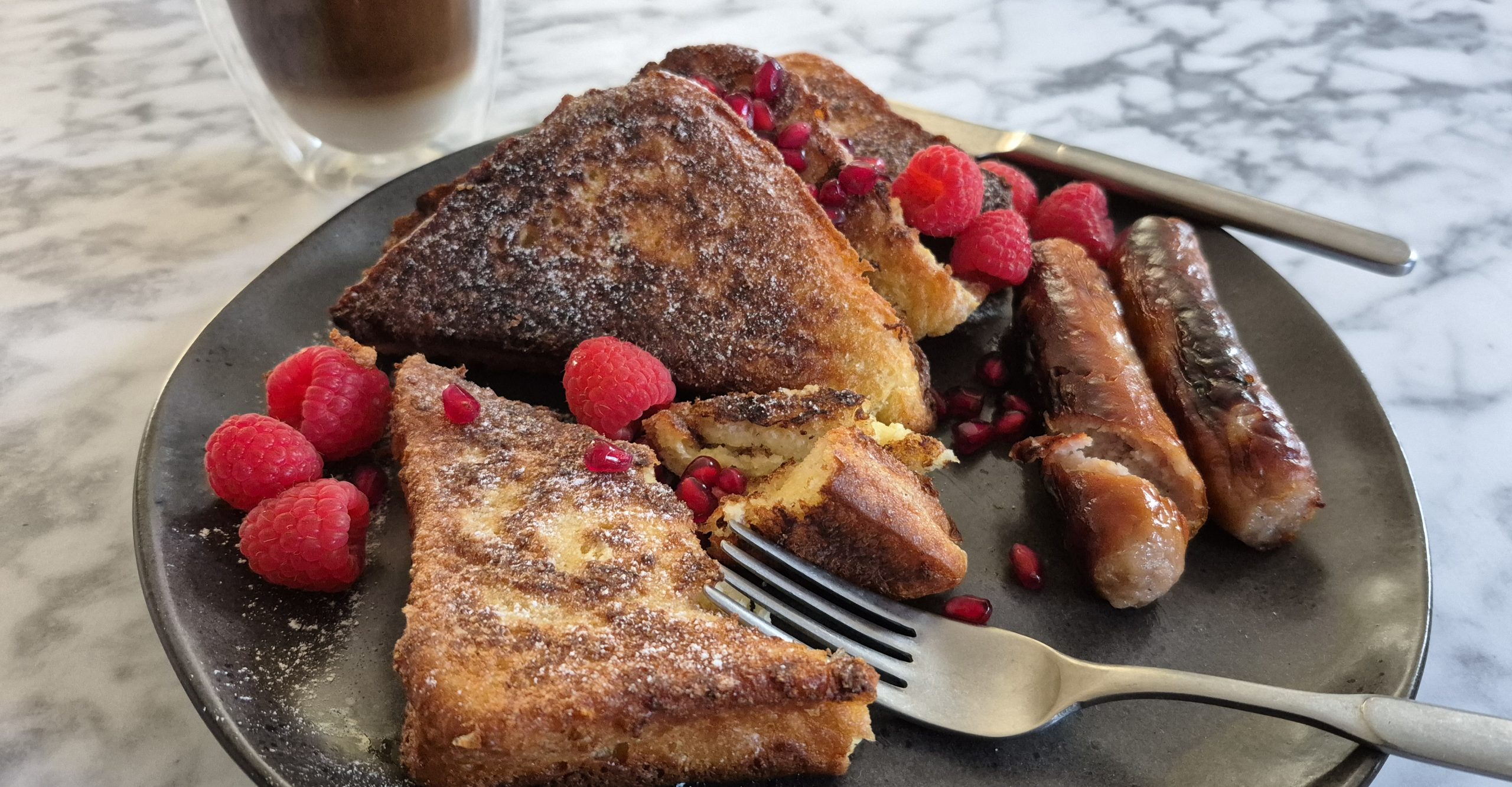
The Santa Fe Railway dining-car service, at its peak, provided nearly a million breakfasts a year… and this item perennially topped their “most popular” list, which (considering the time and care they took in the development of their dishes) should probably be no surprise. The recipe produces a light, puffy, golden result, beautifully crunchy on the outside and tender on the inside… so good that it can take the casual breakfaster (or bruncher) by surprise. It’s a little bit labor-intensive, but absolutely worthwhile.
See the Recipe tab above for the details. (And also: you might like to have a look at the trailer for the 1946 film The Harvey Girls, starring Judy Garland and a cast of other greats.)
*Please note that if you should elect to buy Porterfield’s book using the link above, our website gets a wee tiny commission on the sale. But you probably knew that. 
You’ll need: small mixing bowl or jug, whisk, 12-inch cast iron skillet, paper towels, baking sheet
Preheat oven to 400 degrees
Preparation time: 20 minutes
Yield: 2 servings
Place cooking oil in skillet, heat to hot.
Meanwhile, cut each bread slice diagonally to form four triangles, and set aside.
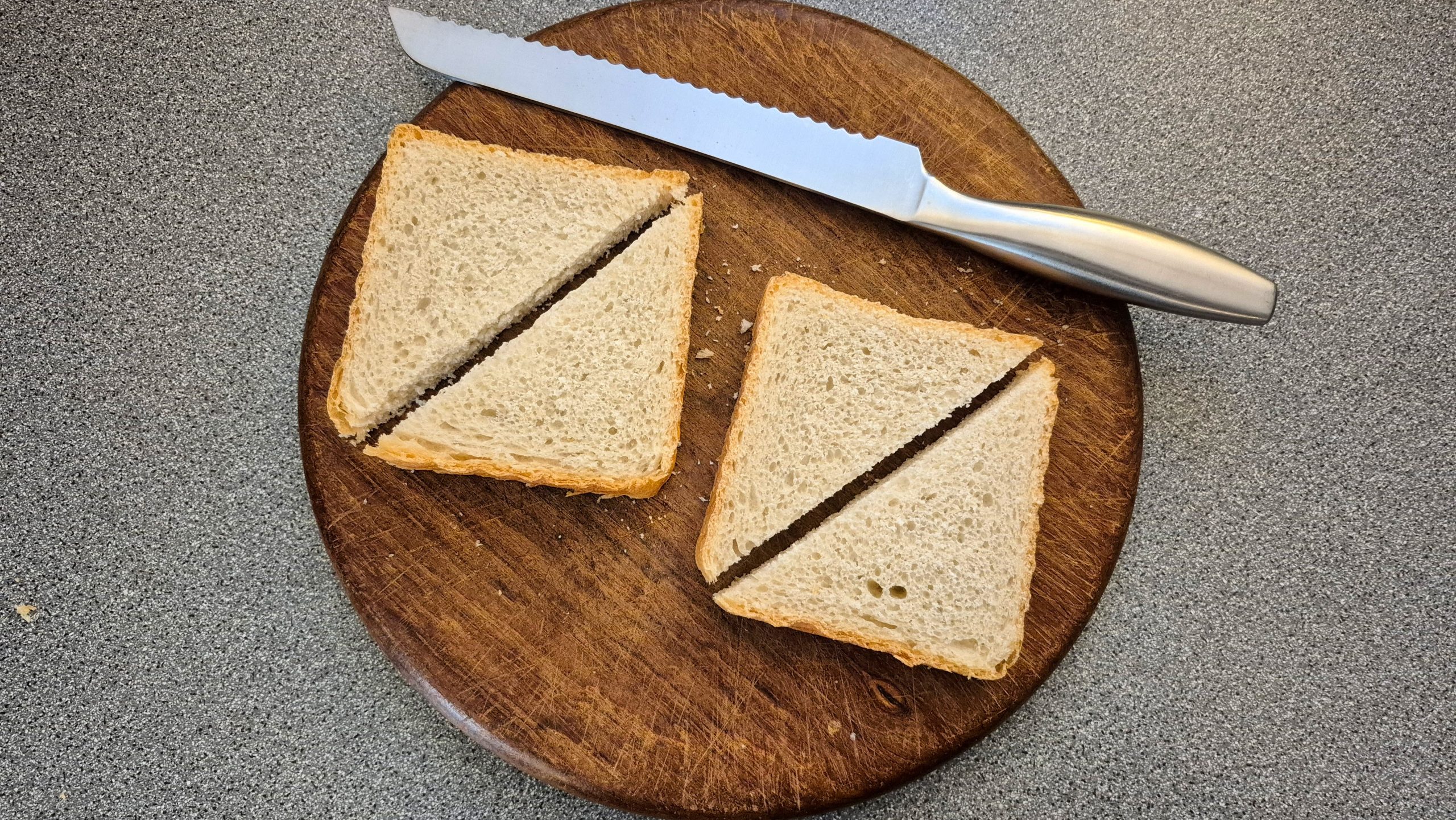
(Interestingly, this recipe, unlike others in this group, doesn’t call for the crusts to be trimmed off the bread. Bearing in mind how punctilious Harvey chefs were regarding details, I have to assume this is intentional: so I’ve left them in place.)
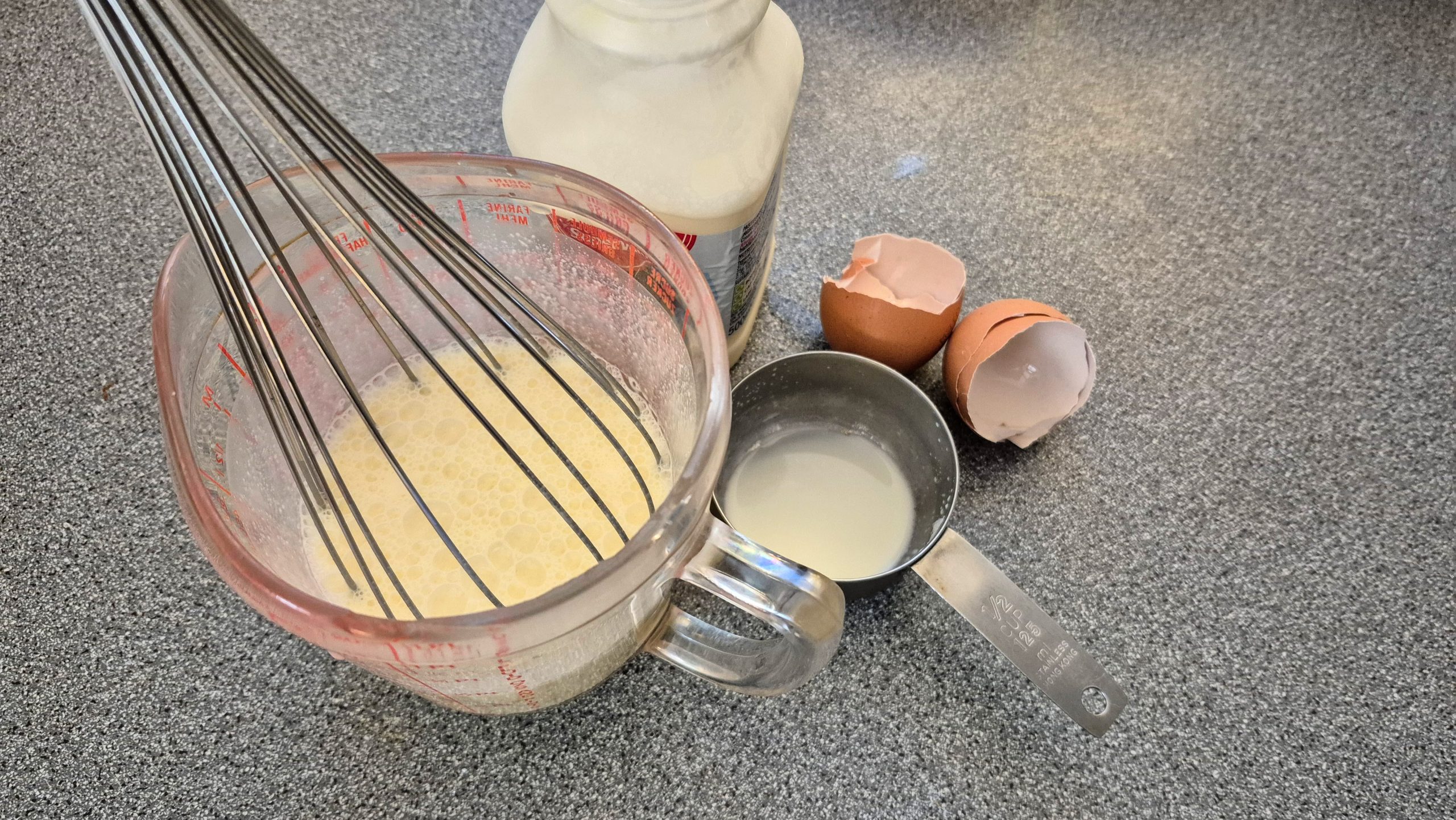
In small bowl, combine eggs, cream, and salt and beat well.
Soak bread thoroughly in egg/cream mixture.
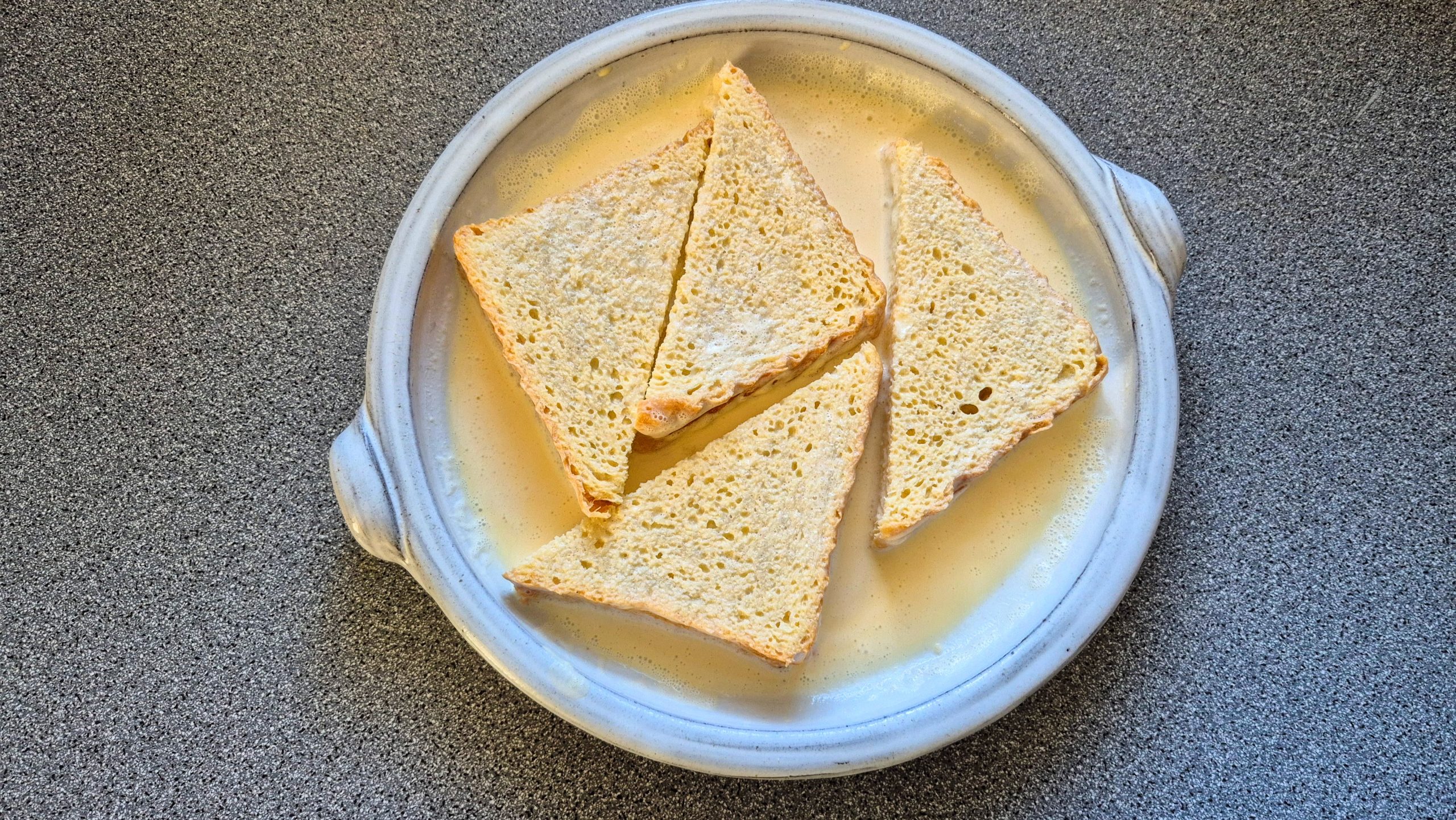
…I strongly recommend that you do as I’ve been doing over this series of French toast recipes, and give the slices an extra soak apiece on each side. This really does seem to produce tenderer interiors and a better fry.
Meanwhile, bring your frying oil up to heat. The recipe’s suggested timing to “a nice golden brown” suggests it should take about 2 minutes per frying side. My oil was at 170º C at this point, so I suggest that to you as a frying temperature.
…Fry soaked bread in hot oil to a golden brown on both sides, about 2 minutes per side.
Lift from skillet to clean paper towel and allow to absorb excess cooking oil.
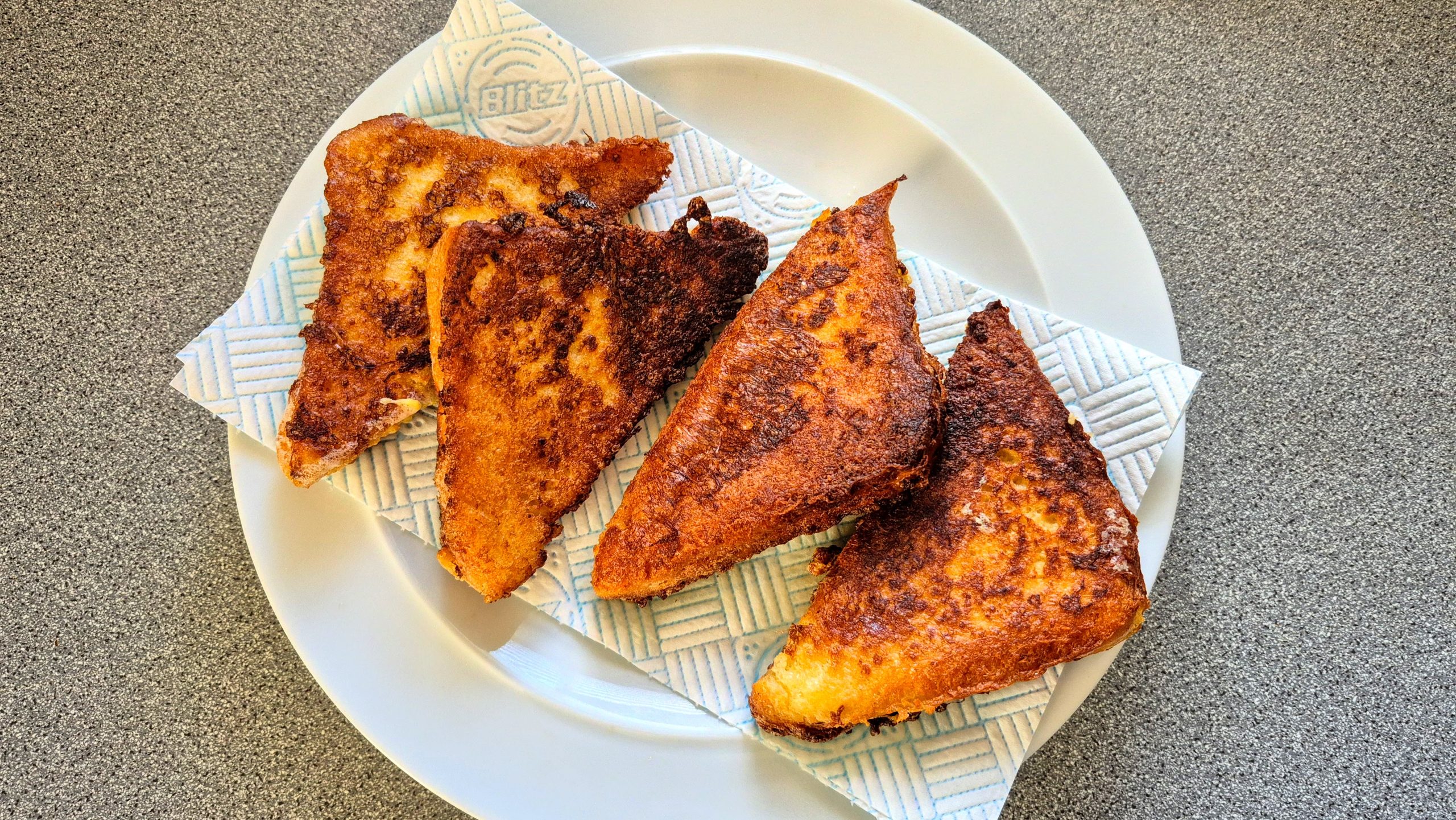
Transfer to baking sheet and place in oven.
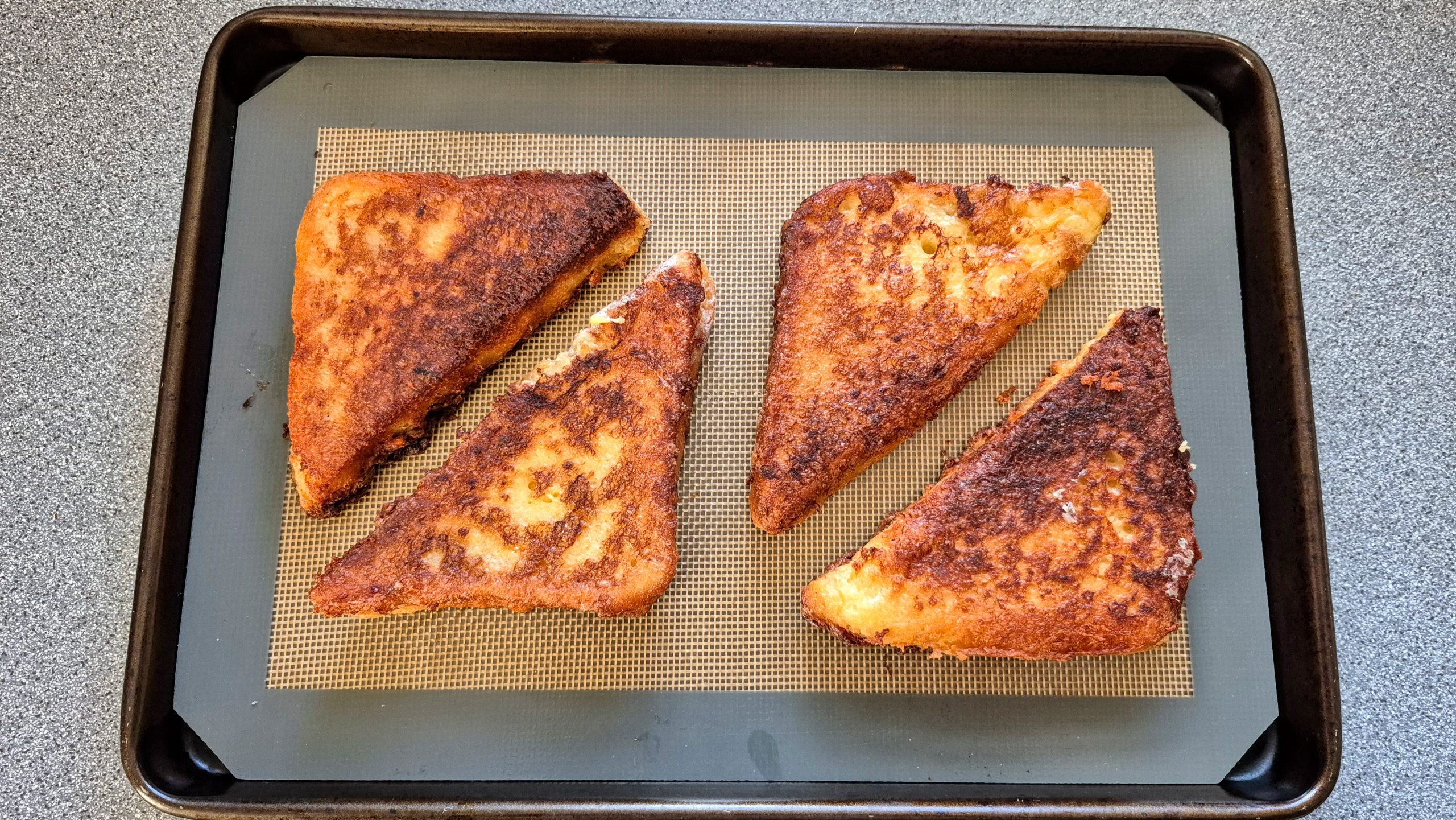
Bake 4-6 minutes, until bread slices have puffed up.
Serve sprinkled with powdered sugar and cinnamon and apple sauce, currant jelly, maple syrup, honey, or preserves, and bacon, ham, or sausage if desired.